Collection: Carbonbögen Viola Arcus/Müsing
The viola asks more of a bow than the violin or cello. Instrument size, string tension and weight vary considerably, and modern viola strings demand more than an off-the-shelf bow can give.
ARCUS and Müsing come from the same workshop in Würzburg. The sticks are hollow, with a wall thickness under one millimetre, which lets them vibrate more freely than a solid stick can. The stick carries a 30 year warranty.
Their natural resonance sits at around 100 Hertz, an octave above classical bows. That is outside the range in which many professional players feel fatigue in hand, arm and shoulder. On the viola, with its heavier bow, the difference is noticeable.
ARCUS T series
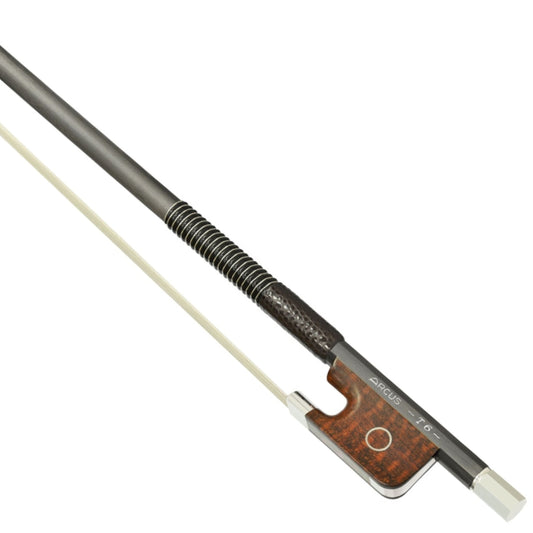
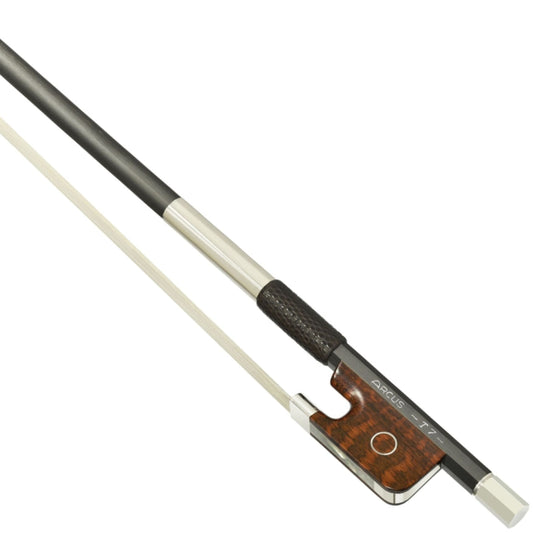
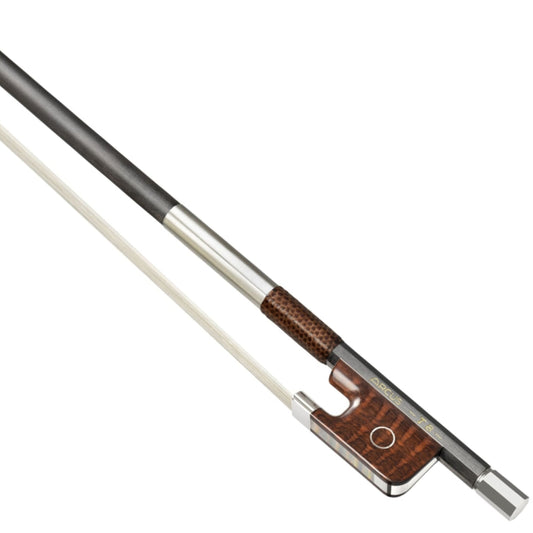
Warm and brilliant at the same time, open and full of facets. About 61 grams. T6, T7 and T8 silver are regularly available, higher models on request.
Müsing C series
If you want to stay close to the sound of a good pernambuco bow. About 61 grams, high stiffness. The C3 is popular with orchestral players as a travel bow. Classical or ergonomic frog. C2 to C4.
Müsing L series
Available since 2025, recognisable by the aluminium head acting as a flywheel. Thinner walls than the C series and therefore freer vibration: clearer, more focused, with more projection. L3 to L6.
The number in the model name is not a price tier but the result of an acoustic test. Every stick is classified individually, and only a few reach the upper classes. Which series suits your viola, we can tell you on the phone in five minutes.

-
Viola Bow Müsing C-Series made in Germany
Regular price From €840,00 EURRegular priceUnit price per -
Viola Bow ARCUS T6
Regular price €3.100,00 EURRegular priceUnit price per -
Viola Bow ARCUS T7
Regular price €4.600,00 EURRegular priceUnit price per -
Viola Bow ARCUS T8 Silver
Regular price €6.600,00 EURRegular priceUnit price per