

Making Music Easy.
Premium Carbon Fiber Instruments. Made in Germany.
You only notice the drag once it is gone.
Many instruments make you work for the note. Not much. Just enough that you have been compensating for it for years without thinking about it.
You press a little harder into the string than you need to. You start the quiet entry a fraction early, because you know it will not arrive on time. None of this is a decision. It has become part of how you play.
We build our tops stiffer than their weight suggests, and without damping irregularities. No growth rings, no soft year, no hard year, no spot that swallows energy. The plate takes less to move, and it keeps moving. What you gain is not milliseconds. It is that doing and feeling move closer together.
Play one for four bars and you will know you have taken the drag off.
Can you hear the difference?
Same piece, same stage. A master wood cello and a mezzo-forte carbon fiber cello in direct comparison. A recording can only hint at response, but it does show that nothing is missing.
You make the music. We give everything for it.
Our violin had won an award in 2015 and it kept selling. We could have left it alone.
But an instrument that works is not the same as an instrument that gives you everything. Somewhere in that difference sits the bar you still have to clear yourself, every day, without noticing.
So we went back to the beginning. With two companies and two university institutes we built around 200 different violin tops and measured every one of them. Some came out worse than what we already had. One came out better, and that one is the violin waiting for you today.
You will not hear the difference in a specification. You will feel it in the fourth bar.
They played it in the dark.
The 2015 jury assessed the entries in a darkened room. They played each instrument themselves and could not see what they were holding. They gave the prize to a violin. That it was the first carbon fiber instrument in the history of the competition, they found out afterwards.

The certificate, signed by the Federal Minister for Economic Affairs and Energy
Jury verdict and award ceremony, German Musical Instrument Award, Frankfurter Römer, 2015
Dr. Iris Gleicke, Parliamentary State Secretary, Federal Ministry for Economic Affairs
Sound sample, Frankfurter Römer, 2015
Violin. Viola. Cello. Bass.
-

Carbon Fiber Violins
Effortless response, direct contact with the instrument, a sound that carries. These...
-
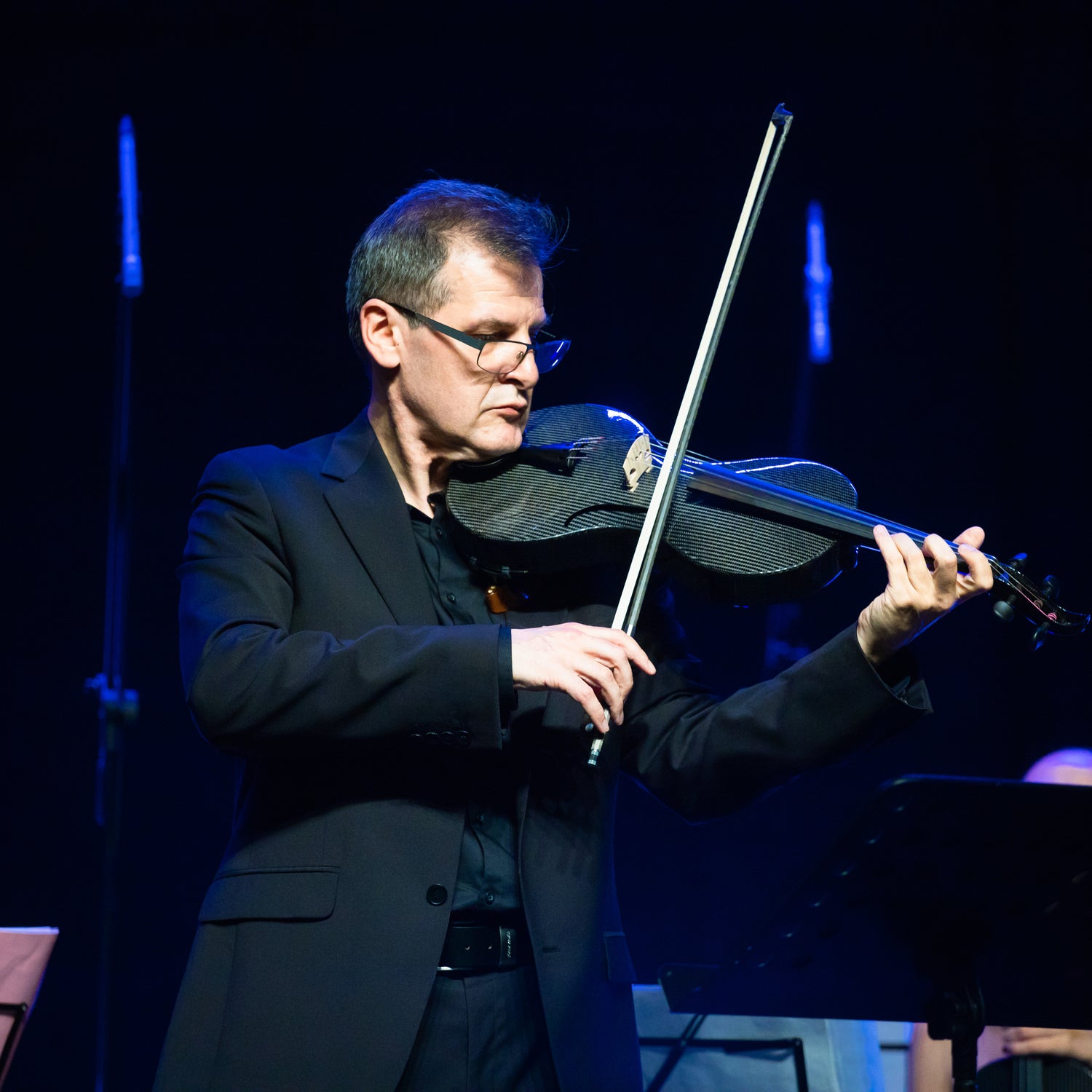
Carbon Fiber Violas
Warm fundamental tone, effortless projection, response without delay. These are the carbon...
-

Carbon Fiber Cellos
Full sound, immediate response, uncompromising resilience. These are the carbon fiber cellos...
-

Carbon Fiber Double basses
The double bass is our last and most complex development. And because...


Not sure yet which one is yours?
Two ways to narrow it down.
Who built the instrument in your hands.
- Twelve people in Werther, Germany.Instrument makers, engineers, technicians. Small enough that everyone knows which instrument is on the bench next door.
- Every step stays with us.From the first layer of carbon fiber to the final play test. No contract manufacturing, no intermediaries, nobody we could blame.
- Before it reaches you, one of us has played it.Every instrument, without exception. Either our instrument maker or the owner himself.
- It will still be here in twenty years.Nothing warps, nothing cracks, no glue seam opens up. Five years of warranty on the body, and carbon fiber does not fatigue.
- You are not the first.3,500 instruments since 2011, played in more than 50 countries.
mf | atelier
Now and then an instrument leaves the workshop that follows no specification. Built once, and then never again. If one of these is yours, you will know within seconds. And if you wait, it belongs to someone else.


Half of your sound comes from the bow.
A good instrument with a mediocre bow stays below what it could do. We carry ARCUS and Müsing because we know how they are built.
Four bars. That is all it takes.
Everything on this page you had to take our word for. The one thing that decides it, you can only find out with the instrument in your hands.